- Wire malleability
- full hard, half-hard and dead soft are the names given to the least and
most flexible wire (respectively).
- Wire
thickness or diameter - is measured in gauges. The larger the number
the thinner the wire. For example, 34-gauge wire is one of the thinnest
gauges and is often used like thread (i.e., in weaving). 26-gauge wire is
thicker again, but still quite thin, and is typically used for beading or
stringing beads. 10-gauge wire, on the other hand, is one of thickest.
- Wire
shapes - there are four shapes: round, half-round, square and twisted.
- Wire
materials - precious to semi-precious materials. Composed of pure metals
or composite metals such as as copper, brass, silver or gold. Composite
examples include gold-filled or sterling silver wire.
- Colored
wire - color-coated copper wire (also known as Enameled Copper Wire)
is available in many hues of the color spectrum (i.e., green, red an blue).
In addition
to wire, wire-wrapping technique frequently uses beads, precious and semi-precious
gemstones, metal findings and a mixture of wire types. That wire-wrapped jewelry
has existed perhaps since wire was first fashioned (by the ancient Romans)
is a testament to its appeal.
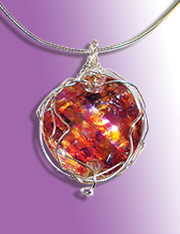
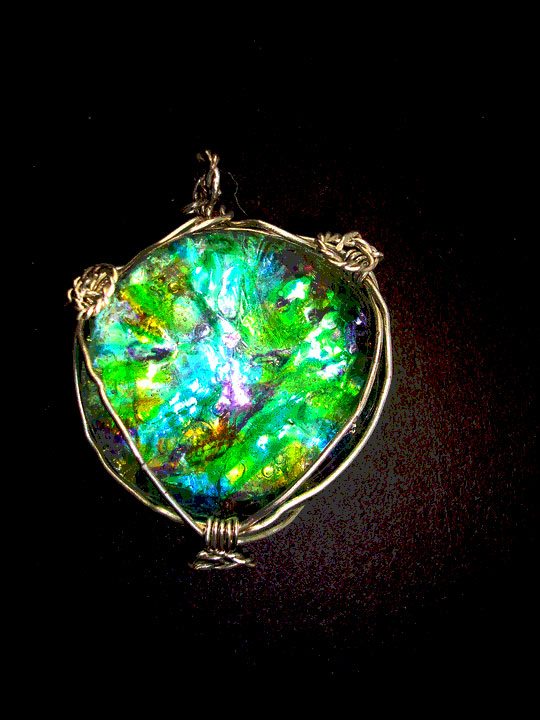
Wire-wrap,
or wire-wrapped jewelry is one of the more ancient yet still popular hand-fabricated
techniques of jewelry design. It utilizes tools such as round nose, flat nose
pliers, vices and wire cutters to cut, shape, bind and twist wire. There are
certain basic characteristics that define wire. They include: